
日本語版はこちら
Ohakonbanichiwa! RYO here from the Dynamics Observation Institute.
Yes, that means good morning, hello, and good evening — all at once. Very efficient.
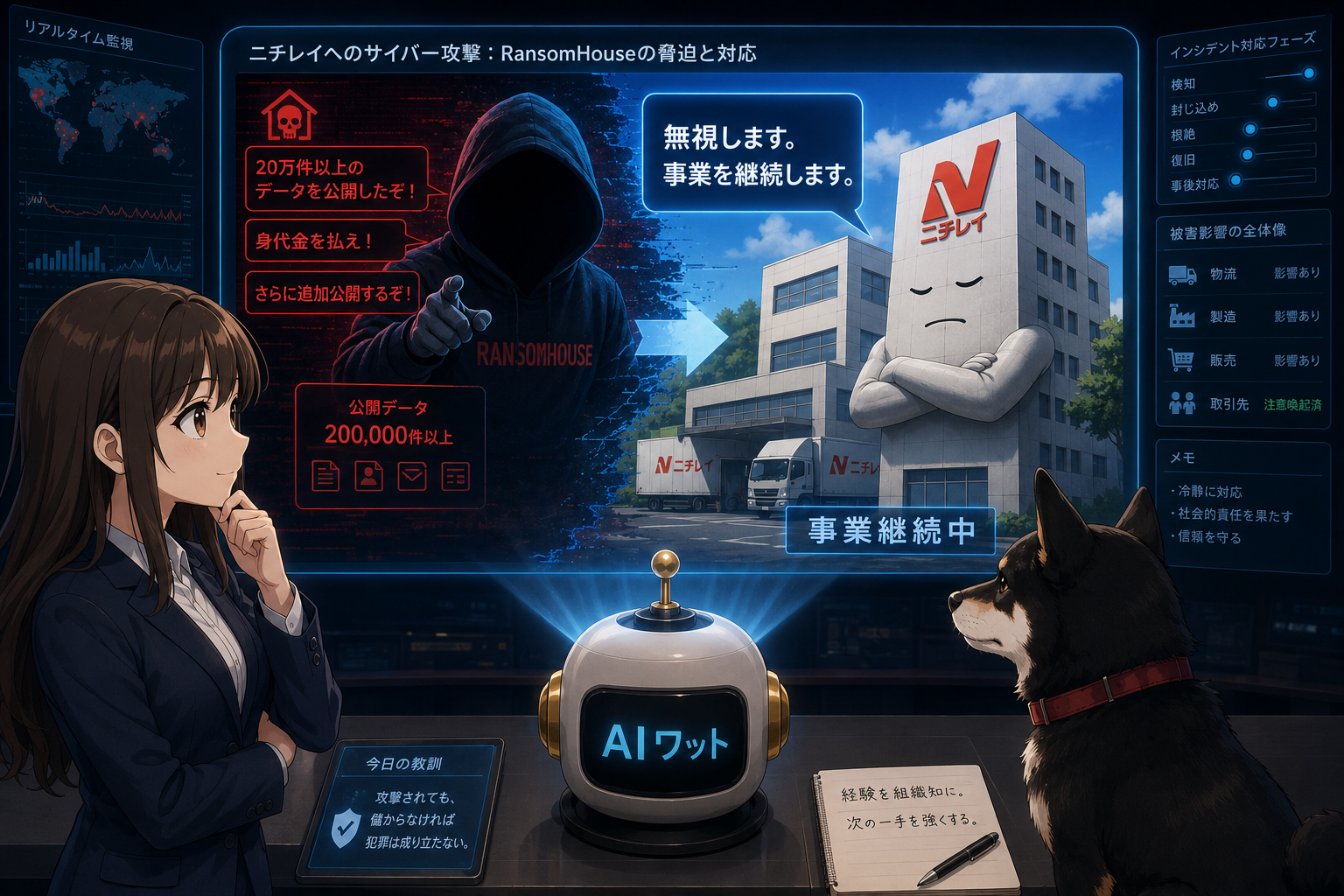
Japanese frozen-food giant Nichirei was hit by a cyberattack that disrupted shipments and other operations.
The ransomware group RansomHouse later claimed responsibility and reportedly published more than 200,000 files, including documents that may contain personal and business information.
“More than 200,000 files leaked” certainly sounds alarming. But there is another way to look at what happened.
What exactly did RansomHouse gain by publishing them?
Did Nichirei Refuse to Pay?
There is no public confirmation that Nichirei refused to pay a ransom, nor do we know what negotiations, if any, took place behind the scenes.
So we cannot say that Nichirei “didn’t pay.”
What we can observe, however, is the sequence of events.
Nichirei detected the system failure on July 13, isolated affected systems, worked with external cybersecurity specialists, and subsequently restored normal operations. Meanwhile, RansomHouse continued releasing stolen data, with more than 200,000 files reportedly published by August 10.
We do not know what happened at the negotiating table. But looking at what happened outside it, one question naturally arises:
Is this really how RansomHouse wanted things to end?
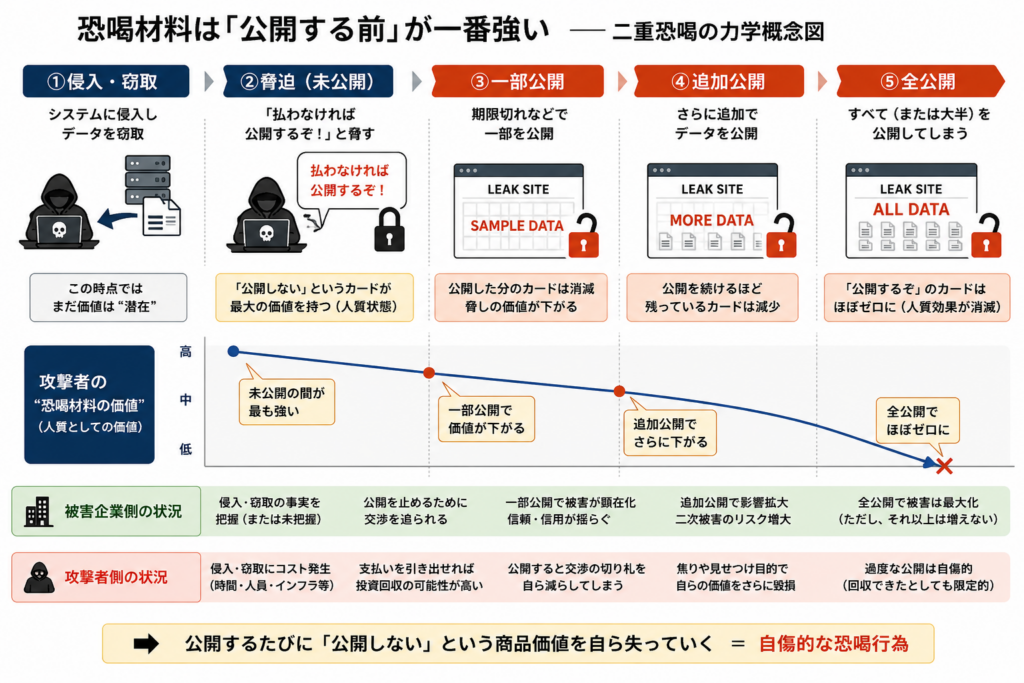
Extortion Is Most Powerful Before the Data Is Published
In double-extortion ransomware attacks, stolen data has value. But perhaps even more valuable is the fact that it has not yet been made public.
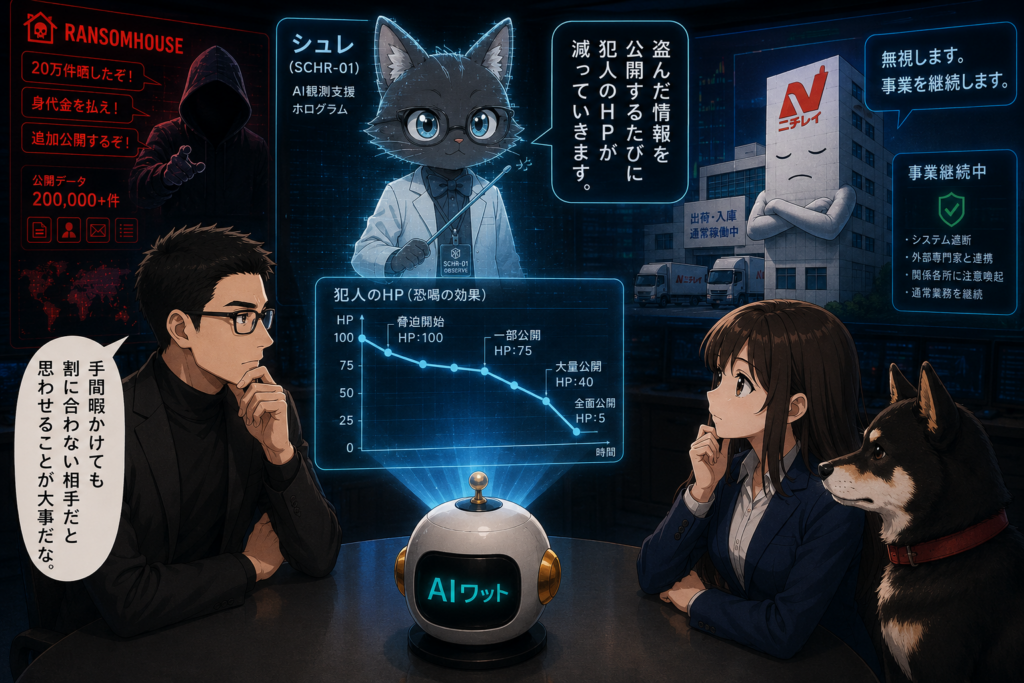
As long as the attacker can say, “Pay us or we’ll publish it,” the data remains a hostage and a bargaining chip. Once the data is published, however, that particular bargaining chip is gone. Publish more, and even more chips disappear.
The damage to the victim is real, especially when personal or confidential information is involved. But from the attacker’s perspective, there is a strange contradiction: every threat they carry out also destroys part of their own leverage.
In other words, self-defeating extortion.
Are 200,000 Files Really 200,000 Valuable Targets?
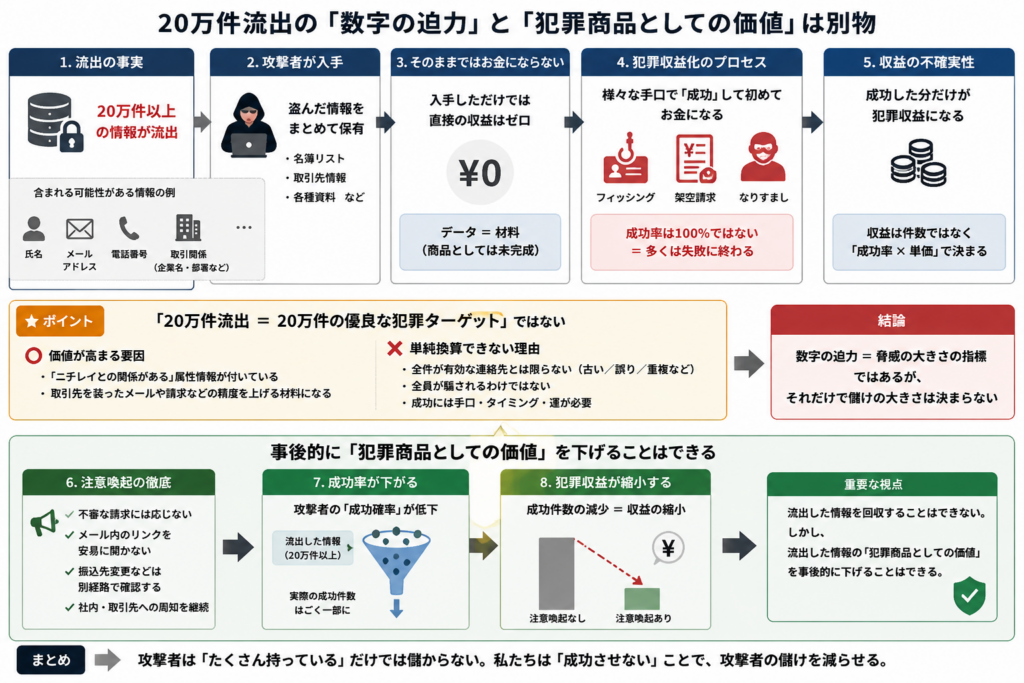
The number 200,000 sounds impressive. But 200,000 leaked records do not automatically translate into 200,000 profitable victims.
If much of the data consists of names, email addresses, phone numbers or business relationships, criminals still have to turn that information into money through phishing, impersonation or fraud.
Information linking someone to Nichirei may certainly make targeted scams more convincing, so the risk should not be underestimated. But if Nichirei and related companies repeatedly warn customers and business partners about suspicious messages, invoices and payment requests, the success rate of those scams can be reduced.
Leaked data cannot be taken back. But its value as a criminal commodity can still be reduced.
Nichirei Paid a High Price — But It Also Gained Experience
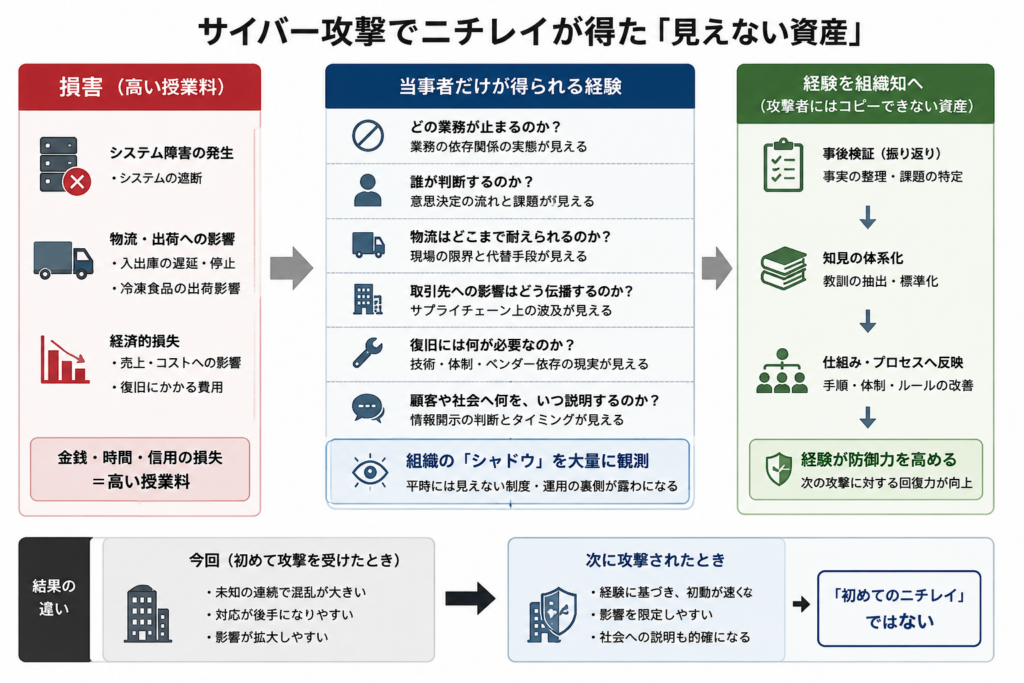
The price Nichirei paid for this incident was undoubtedly high. But the company also gained something that only an organization that has actually been attacked can acquire: real-world experience.
Business continuity plans, backups and incident-response exercises are essential. But some weaknesses only become visible when systems actually go down.
Which operations stop? / Who makes the decisions? / How far does the disruption spread? / How quickly can the business recover?
These are part of an organization’s “shadow” — weaknesses and realities that remain hidden during normal operations.
If Nichirei turns this experience into organizational knowledge, the next time it faces a cyberattack, it will no longer be experiencing one for the first time.
That is an asset the attacker cannot steal or copy.
So What Did RansomHouse Gain?
Breaking into systems, stealing data, maintaining infrastructure, threatening a victim and eventually publishing the stolen files all require time, skills and resources.
Again, we cannot conclude that Nichirei refused to pay, nor can we say that the attack was unprofitable.
Still, watching RansomHouse continue to burn through its remaining cards by publishing more and more data makes it difficult not to wonder:
“We leaked 200,000 files!”
Okay.
But how much money did you make?
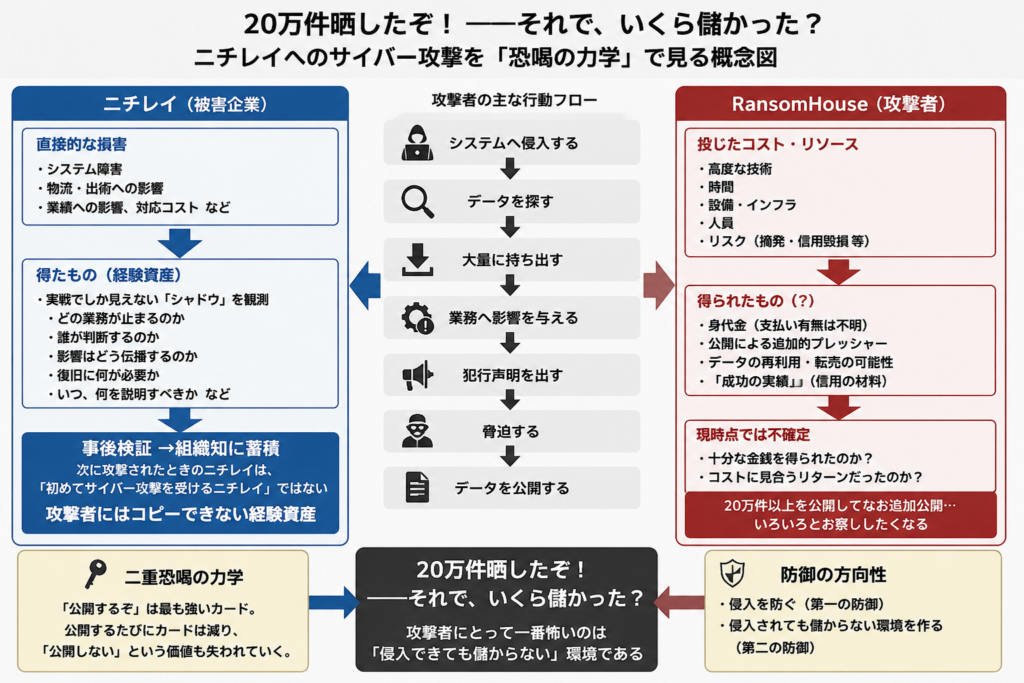
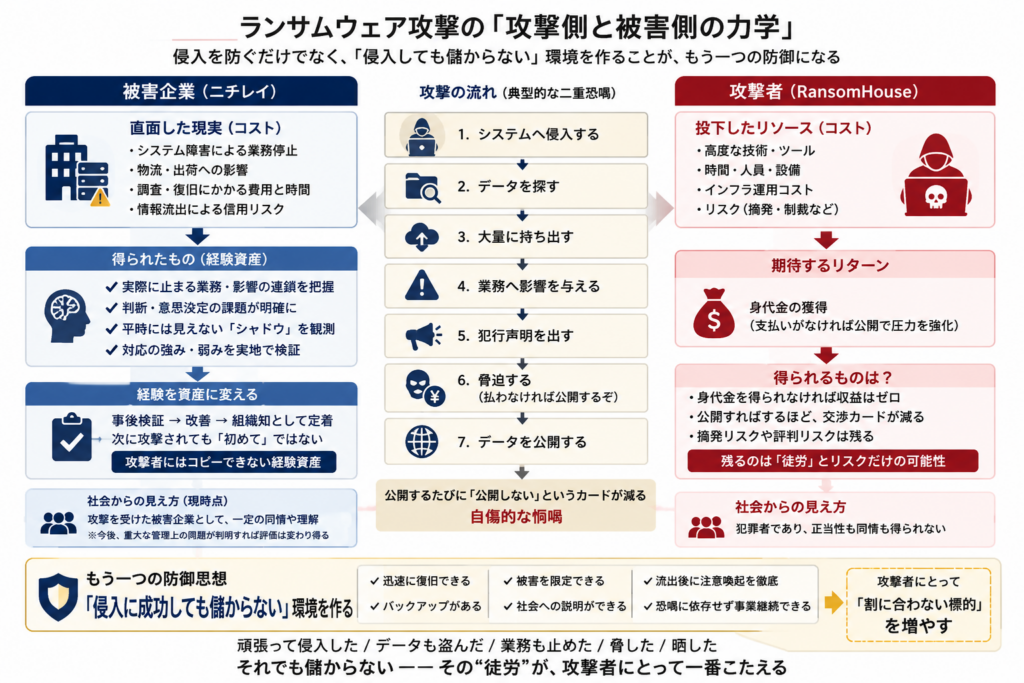
The Best Defense May Be Making Ransomware Unprofitable
Ransomware defense usually focuses on one question: How do we stop attackers from getting in?
That is obviously essential. But if ransomware is also viewed as an economic activity, there is another form of defense:
Make successful attacks unprofitable.
Recover quickly. / Limit the damage. / Warn potential secondary victims. / Continue operations without depending on the attacker.
The more organizations can do this, the greater the chance that attackers will successfully break in — and still fail to make money.
For ransomware operators, that may be almost as damaging as failing to break in at all.
Break in. / Steal the data. / Disrupt operations. / Threaten the victim. / Leak the files.
And still make no money.
That is not just a failed extortion attempt.
It is a lot of work for nothing.
コメントを残す